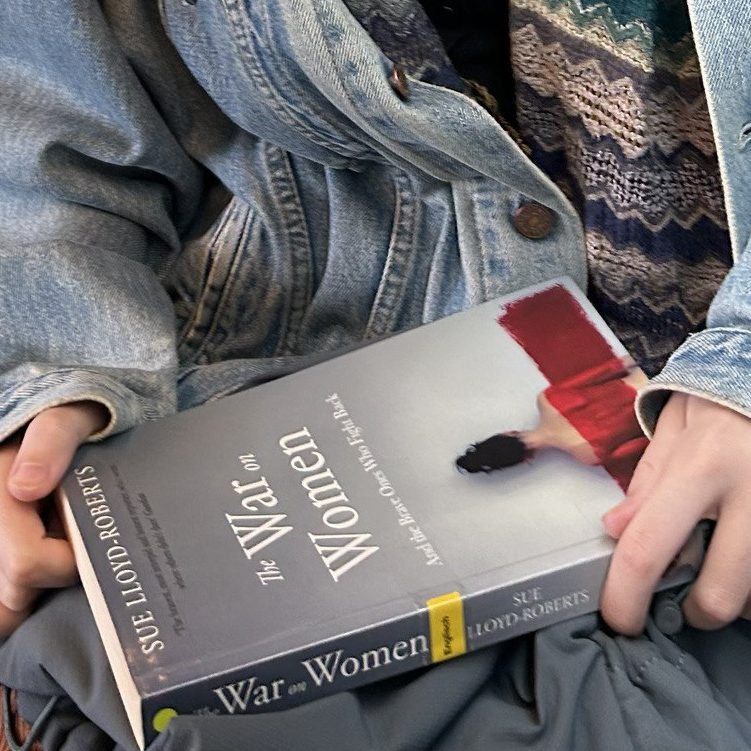
I am currently reading “The War on Women by Sue Lloyd-Roberts, one of the most influencial video-journalists of her time. Sue L.R. won a multitude of awards during her lifetime; mostly for her numerous investigations on abuses of human rights.
I could list them all, but it would literally take a seperate blog entry to write about all her accomplishments. If there is one thing that I want to highlight, it is, that she used her (way too short) life to fight for those who couldn’t themselves and stand with those who fightback. Sue died at the age of 62 just months before her book was released.
Sue died in October 2015, yet her inspiring legacy lives on through several projects that promote journalism, women and human rights.
http://www.suelloydroberts.org
Her collection of reports and articles documents the lives and tragedies of a number of immensely brave women.
I’m on chapter 3 at the moment, but so far I have cried reading about Female Genital Mutilation (FGM) and shouted at my book when politicians excused their violation of human rights through culture and customs.
The Gambia’s eccentric president, Yahyma Jammeh, who is said to have boasted that he could cure HIV/AIDS with his herbal remedy, has declared that FGM is part of Gambian culture. In 2013, a month after the BBC broadcast my film about FGM in the Gambia, he withdrew his country from the Commonwealth claiming he no longer wants his country to be subjected to neo-colonial influences.
The War on Women, Sue Lloyd-Roberts, p.14-15
I am truly passionate about this book as it already gave me so many insights into Argentina’s Dirty war and Female Genital Mutilation. Other topics that the book will cover are Sex Trafficking or Forced Marriage, the Pay Gap, Rape as a Weapon of War, Honour Killings, Religious Persecution and the Wold’s Largest Women’s Prison.

I love that so far the book has been “easy” to read – in a way that I can follow the story like the reporter covered it. We dive into the stories of individuals, get additional information through stats, government policies and statements and finally, can see how the reporter argues in her investigation. I know that the story of Maimouna for example, the women from Chapter 1, stands for thousands girls and women that faced and still face similar fates today.
If you are interested in more literature of that kind, please let me know. I truly recommend reading Sexual Revolution: Modern Fascism and the Feminist Fightback by Laurie Penny.


 julie's Path of Growth
Leave a comment